
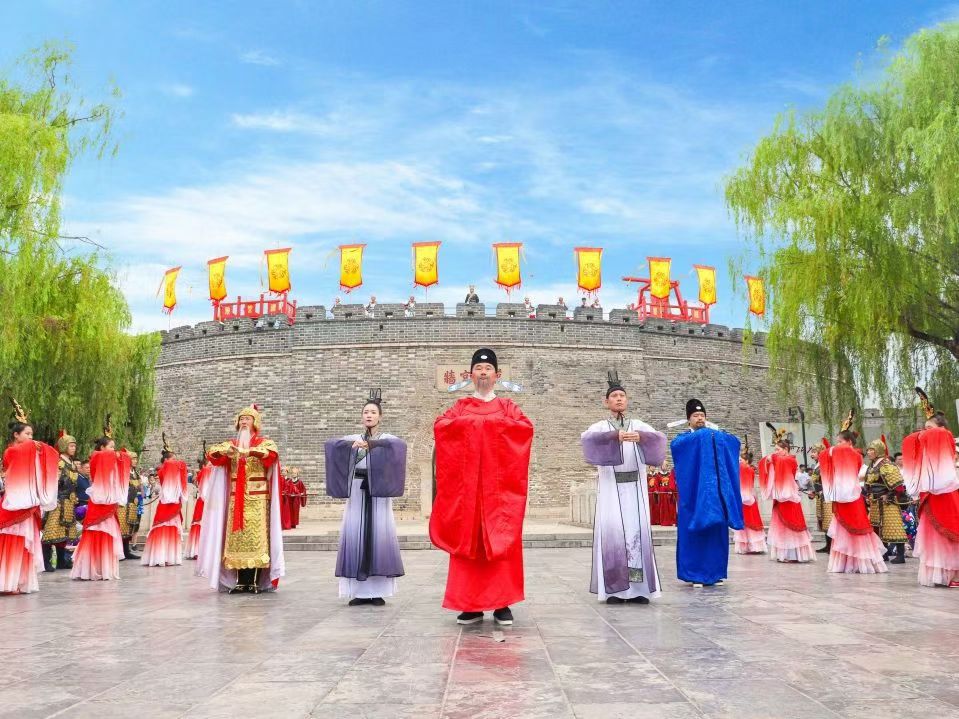
Guqin, as a vital vehicle of Chinese ritual and musical civilization, is honored as the foremost of the “Four Arts.” It embodies the Confucian cultural ideals of self-cultivation and moral edification. In the history of guqin literature, the Qinyuan Xinchuan Quanbian (Complete Compilation of the Heart’s Transmission from the Qin Garden), compiled by Kong Xingyou (courtesy name Qizheng, art name Xiuzi), a 66th-generation descendant of Confucius in the late Ming and early Qing dynasties, stands as the crowning achievement of the Kong Family’s qin studies. With its meticulous structure, rich content, and orthodox thought, it serves as an exemplary integration of Confucian qin theory and practice. This paper will, from an academic perspective, systematically examine the background, structural features, ideological connotations, and cultural value of this monumental work, revealing its significant place in the history of the guqin and the transmission of Confucian culture.
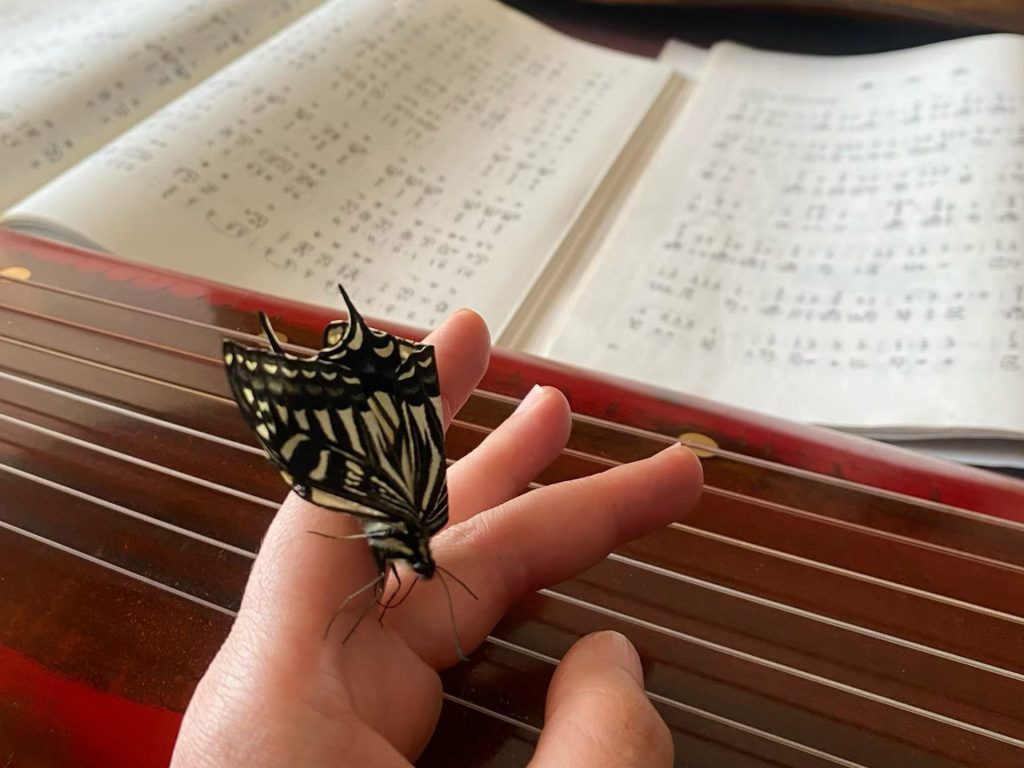
I. The Responsibility of a Sage’s Descendant: Compilation Background and the Author’s Life.
01 [ The Millennial Legacy of Qin Studies in the Kong Family Mansion ]
The Kong family’s qin tradition originates with Confucius himself. The Records of the Grand Historian: The House of Confucius relates that “Confucius learned the qin from Music Master Xiang,” mastering not only the technique but penetrating to the very essence of the piece, discerning the personality and spirit embodied in the music. Following the formal establishment of the “Duke for Perpetuating the Sage” (Yanshenggong) title in the second year of the Zhihe reign of the Northern Song Dynasty (1055), the Kong Family Mansion became the epicenter of Confucian ritual and music for the entire realm. Qin studies were thus formally integrated into the mansion’s sacrificial rites to Confucius and its system of clan education. During the Ming Dynasty, Kong Yinzhi, the 65th-generation Duke, reorganized the clan school, designating qin studies as a mandatory discipline for the sage’s descendants and standardizing the instructional procedures for ritual qin music. This institutional groundwork laid a solid foundation for the eventual compilation of the Qinyuan Xinchuan Quanbian.
02 [ The Author Kong Xingyou and the Course of Compilation ]
Kong Xingyou, a 66th-generation descendant of Confucius and a scion of the Kong Family Mansion’s Linyi branch, is identified on the title page as “Compiled and Edited by Kong Xiuzi of Queli”—an attribution that explicitly proclaims his lineage credentials. The compilation of the Qinyuan Xinchuan Quanbian was an immense undertaking spanning thirty-two years (1636–1668), from the ninth year of the Chongzhen reign in the Ming Dynasty to the seventh year of the Kangxi reign in the early Qing. The work was officially printed in the ninth year of Kangxi (1670) at the Yunxiang Pavilion in Jinling (modern-day Nanjing). Kong Xingyou centered his entire enterprise on the principle of “inheriting the Kong family’s scholarly tradition and transmitting the Way of the sages and worthies.” As he states in his preface: “This compilation gathers the enduring models of past sages and sets forth the established doctrines of former worthies, with the hope of rectifying the human heart and enriching social customs, and not merely for the entertainment of the ear and eye.” This declaration embodies the cultural sense of duty and scholarly self-awareness of a true descendant of the sage.
II. Meticulous Structure and Rigorous Organization: The System and Content Features.
The Qinyuan Xinchuan Quanbian comprises twenty volumes in total, organized into two integrated parts: eight volumes of qin theory and twelve volumes of qin scores, thereby achieving an organic unity of theory and practice. The Descriptive Catalogue of the Continued Siku Quanshu commends it with the following assessment: “In its treatment of the phrasing, sections, and structural divisions of the musical pieces, it meticulously collates and explicates, appending critical commentary within each piece. It investigates tonal systems, details instrumental specifications, and transcribes the discourses of various masters, in every case noting the source. Its editorial structure is supremely precise and scrupulous.”
| Volumes | Content Category | Core Content | Academic Value |
| 1-2 | Biographies of Qin Players | The work systematically traces the lineage of qin masters through the ages, from Fuxi and Shennong to the Ming Dynasty. | This fills a significant gap in the systematic compilation of qin player biographies prior to the Ming Dynasty. |
| 3-4 | Qin Temperament Theory | These volumes discuss qin temperament and sound theory, examine historical tuning systems, and analyze the principles of the five notes, seven tones, and twelve pitches. | They clarify numerous theoretical errors in the development of qin studies, radically reforming and rectifying the tradition. |
| 5-6 | Qin Craftsmanship | They detail the materials, craftsmanship, form, and methods for making and evaluating the qin. | This preserves precious data on Ming Dynasty qin-making techniques, holding significant value for the history of craftsmanship. |
| 7-8 | Qin Notation and Fingering | These volumes explain character notation and fingering techniques, standardize the shorthand tablature system, and expound on the essentials of finger methods. | They unified the terminology for guqin fingering, exerting a profound influence on the compilation of later qin handbooks. |
| 9-20 | Qin Repertoire | They contain a total of 80 qin pieces, including classics such as Guangling San, Three Variations of the Plum Blossom, and Flowing Water. | This preserves the complete appearance of Ming Dynasty qin music, providing empirical evidence for research on the evolution of the qin repertoire. |
01 [ Academic Innovations in the Qin Theory Section ]
The theoretical volumes demonstrate three major scholarly innovations:
- Rigorous Textual Scholarship: The compilation adheres to the principle of “noting the source for every cited treatise,” meticulously documenting references to texts such as the Book of Rites, the Record of Music, the Qin History, and the Qin Discourse. This reflects an early foreshadowing of the evidential scholarship spirit that would characterize Qing Dynasty learning.
- A Complete Theoretical System: From the origins of the qin, through temperament, craftsmanship, and performance technique, to aesthetic appreciation, it constructs a fully integrated Confucian theoretical system. It emphasizes the instrument’s moral-transformative function: “The qin means restraint; it serves to prohibit licentiousness and depravity, and to rectify the human heart.”
- A Systematic Standardization of Fingering: It explicates in detail the symbolic meanings of the shorthand tablature and performance techniques, rectifying the chaotic inconsistencies inherited from earlier generations. As Volume Seven states: “If fingering is unclear, the tones lose their measure; if the tones lose their measure, the intent deviates from principle.”
02 [ The Distinctive Value of the Qin Score Section ]
The score section exhibits three distinctive features that underscore its scholarly and cultural value:
- Meticulous Collation of Scores: The work exemplifies rigorous textual criticism in its treatment of musical notation. It meticulously compares different versions of each piece, noting textual variants and discrepancies, thereby ensuring the accuracy and reliability of the transmitted scores. This scholarly approach treats musical texts with the same philological seriousness accorded to classical literature.
- Interpretive Commentaries Appended to Each Piece: Kong Xingyou appended his own critical commentary after each qin piece, elucidating its moral substance and aesthetic conception. His remarks integrate Confucian ethical interpretation with artistic appreciation. For instance, his commentary on Three Variations of the Plum Blossom states: “The purity and integrity of the plum, the crystalline clarity of snow, the remote lucidity of the sound, and the lofty purity of the conception—these four are fused into one, and this constitutes elegant music.” Such commentaries elevate the scores from mere technical instructions to vehicles of moral and spiritual cultivation.
- Preservation of Rare and Unique Repertoire: The collection safeguards precious materials from pieces that might otherwise have been lost to history. It includes qin compositions specifically associated with the Kong Family tradition, such as Elegant Melody of the Apricot Altar and The Sage’s Descendant, works that embody the distinctive character of the clan’s scholarly heritage and would be unavailable in other qin handbooks. This preservation of family-specific repertoire offers an invaluable window into the private musical culture of the Kong mansion.
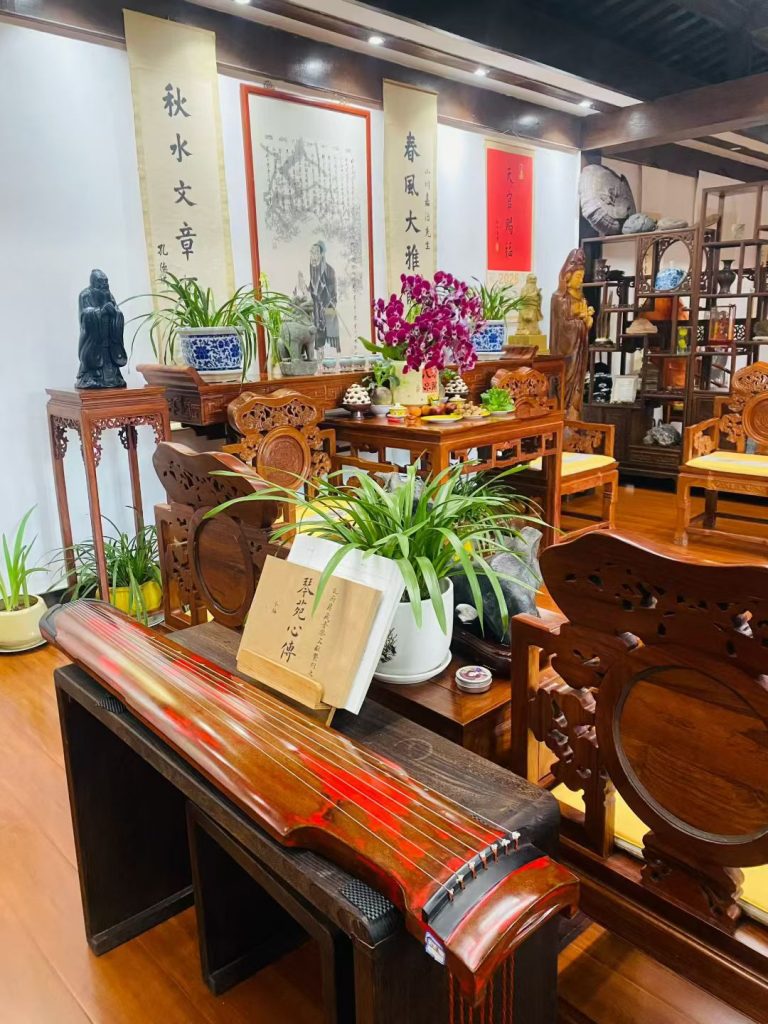
III. The Spiritual Transmission of Sagely Learning: The Ideological Core of the Kong Family’s Qin Studies.
01 [ The Core Value of “Cultivating the Body and Ordering the Inner Nature” ]
The Qinyuan Xinchuan Quanbian takes the fundamental Confucian project of “cultivating the self, regulating the family, ordering the state, and bringing peace to all under Heaven” as its ultimate purpose, emphasizing the moral-transformative function of qin study. As the first volume declares:
“The qin is the instrument of the heart; the heart is the pivot of the Way. Therefore, in the Way of playing the qin, one must first rectify the heart. When the heart is rectified, the tones are rectified; when the tones are rectified, the moral significance becomes luminous; when the moral significance is luminous, one may then move other hearts and stir all living things, transforming the people and perfecting social custom.”
This logical chain—the qin transmits the heart, the heart transmits the sage, and the sage transmits the Way—encapsulates the core conviction of the Kong Family’s qin studies: that the qin serves as a vessel for the Way itself.
02 [ The Aesthetic Pursuit of “The Beauty of Centrality and Harmony” ]
Kong Xingyou inherited Confucius’s musical ideal—expressed in the Analects as “joy without licentiousness, sorrow without self-injury”—and established “centrality and harmony” (zhonghe) as the supreme aesthetic standard for qin music. In Volume Three, discussing qin temperament, he writes:
“Centrality and harmony constitute the very substance of music. When clarity and turbidity are properly balanced, strength and gentleness temper one another, high and low are suitably measured, and slowness and swiftness are appropriately regulated—this is the sound of centrality and harmony.”
He further criticizes the musical trends of his own age: “The music of degenerate times either drifts into the effeminately ornate or rushes toward the violently agitated. Both have lost the essential intent of centrality and harmony, and neither is the music of the sage.” This critique vividly embodies the Confucian commitment to upholding the tradition of orthodox, refined music against what it viewed as the decadent and disruptive sounds of a disordered age.
03 [ The Cultural Self-Consciousness of “Transmitting the Family Learning” ]
As a product of the Kong Family’s clan scholarship, the Qinyuan Xinchuan Quanbian displays throughout a profound cultural self-consciousness regarding the mission of “the sage’s descendant transmitting sagely learning.” The title page attribution—”Compiled and Edited by Kong Xiuzi of Queli”—explicitly proclaims its identity as a family transmission. Throughout the text, Kong Xingyou repeatedly invokes the utterances of his Confucian forebears: Confucius’s dictum that one “is stimulated by the Odes, established by the rites, and perfected by music,” and Zisi’s teaching that “before pleasure, anger, sorrow, and joy arise, this is called centrality; when they arise and all attain due measure, this is called harmony.” These citations serve to reinforce the work’s deep-rooted lineage of family learning.
It is precisely this mode of clan-based transmission that preserved the unadulterated Confucian character of the Kong Family’s qin studies, distinguishing it from other qin schools of the period that might have been more susceptible to syncretic influences from Daoist or Buddhist aesthetics. The compilation thus stands as a testament to the unique role of hereditary family scholarship in maintaining intellectual and artistic orthodoxy across centuries.
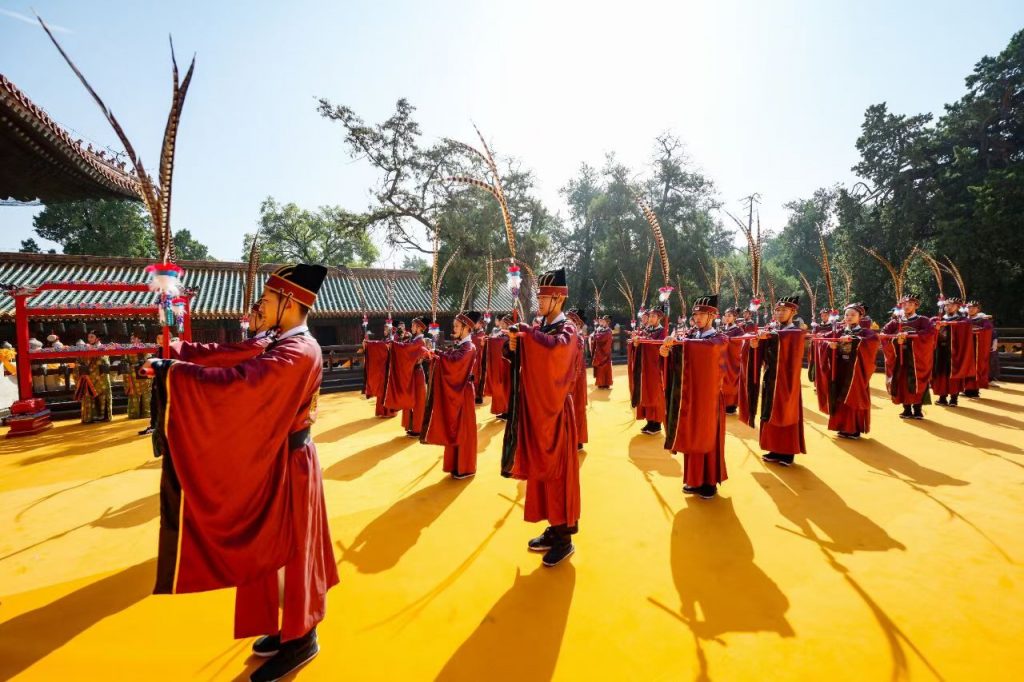
IV. Scholarly Contributions: The Dual Significance for Guqin History and Confucian Culture.
01 [ Its Definitive Place in the History of Qin Studies ]
The Qinyuan Xinchuan Quanbian stands as a crowning synthesis in the history of guqin scholarship, making three foundational contributions:
- Theoretical Synthesis: It provides a systematic and comprehensive survey of qin theory through the ages, clarifying numerous long-standing errors and confusions in the understanding of musical temperament, instrument construction, and fingering techniques. By adhering to the principle of “examining tonal systems, detailing instrumental specifications, and transcribing the discourses of various masters, in every case noting the source,” it established an authoritative reference point for all subsequent qin scholarship.
- Practical Standardization: It unified the shorthand tablature system and the terminology of fingering techniques, so that, as the text itself states, “by explicating the character notation and fingering methods, it enables students to have a reliable standard to follow.” This played a crucial role in the regularization of guqin performance practice and pedagogy, the effects of which extend into modern times.
- Documentary Preservation: Its collection of eighty qin pieces, including a number of otherwise lost compositions, provides invaluable material for the archaeological study of guqin music. The work’s significance for modern reconstruction is powerfully demonstrated by the fact that the renowned scholar Gu Meigeng, in his Examination and Interpretation of the Ancient Fingering of “Guangling San”, specifically acknowledged discovering a critical score of Guangling San within its pages.
02 [ A Vital Vehicle for the Transmission of Confucian Culture ]
The Qinyuan Xinchuan Quanbian serves as an indispensable carrier of Confucian cultural heritage in three interconnected dimensions:
- The Perpetuation of the Spirit of Ritual and Music: Kong Xingyou wove the core Confucian imperative of “restraining the self and returning to ritual propriety” into the very fabric of qin study, transforming the instrument into a living vehicle for embodying the spirit of ritual and music. As the first volume declares: “The qin as an instrument exists to rectify the heart, cultivate the self, regulate the family, order the state, and bring peace to all under Heaven; it is not merely a tool for gratifying the ear.” This passage crystallizes the conviction that qin practice is, in its truest form, an act of moral and spiritual discipline aligned with the deepest purposes of Confucian civilization.
- The Manifestation of Sagely Descendant Culture: As a work of qin scholarship compiled by a direct descendant of Confucius, it embodies the profound sense of custodial responsibility inherent in the sage’s lineage. Kong Xingyou states in his own preface: “Our family, since the time of the Sacred Ancestor, has transmitted ritual and music from generation to generation. Qin studies form one branch of this family learning, and I dare not let it fall.” This declaration reveals the deeply personal and familial dimension of the compilation, framing it as an act of filial piety and clan duty on a civilizational scale.
- An Instrument of Moral Edification: Through his interpretive commentaries on individual qin pieces and his systematic theoretical expositions, Kong Xingyou integrated Confucian ethical principles directly into the practice of qin study. As Volume Eight instructs: “The student who learns the qin must first clarify moral principles; when moral principles are clarified, the mind can be rectified; when the mind is rectified, the self can be cultivated.” In this pedagogical framework, musical training and ethical self-cultivation are not separate pursuits but a single, unified path toward personal and social transformation.
V. Lasting Influence: Scholarly Value and Contemporary Relevance.
01 [ Scholarly Influence on the Study of Guqin History ]
The Qinyuan Xinchuan Quanbian has exerted a lasting and multifaceted influence on guqin historical research:
- Bibliographical Value: The original edition printed at the Yunxiang Pavilion in the ninth year of the Kangxi reign (1670) became an important model for the engraving and publication of later qin handbooks. Of the surviving eight volumes, all—with the exception of the first volume, which was supplemented by handwritten transcription—are preserved as original prints in excellent condition. They thus constitute not only textual authorities but also material artifacts for the study of early Qing publishing techniques and print culture.
- Significance for Qin School Studies: The compilation represents the concentrated embodiment of the Kong Family qin school’s defining characteristics: an aesthetic of “refined correctness and central harmony” and a guiding principle of “using the qin as a vessel for the Way.” As such, it provides an indispensable foundation for comparative research, enabling scholars to trace the relationships, mutual influences, and divergences between the Kong Family school and other major lineages of the period, such as the Yushan and Guangling schools.
- Value for Musical Archaeology: The modern scholar Wang Deqin, in his study The Kong Family’s Classic for Musical Archaeology: The Qinyuan Xinchuan Quanbian, has emphasized that this work holds indispensable value for understanding the fundamental approaches and scholarly perspectives of the Kong Family musicians and their engagement with what we would now call the archaeology of qin music. Its meticulous documentation of ancient notations and fingerings makes it a key resource for the ongoing project of reconstructing and reviving early qin repertoire.
02 [ Insights for Contemporary Cultural Transmission ]
The Qinyuan Xinchuan Quanbian offers profound lessons that extend well beyond its historical moment, speaking directly to the challenges of cultural preservation and renewal in our own time:
- The Integration of Tradition and Modernity: The scholarly ethos at the heart of the compilation—its commitment to “radically reforming the tradition and restoring the glory of the sagely teachings”—carries a vital message for contemporary guqin education and transmission. It reminds us that meaningful innovation must be grounded in a deep and authentic engagement with cultural origins. In an era of rapid change, the work stands as a call to safeguard the essential spirit of tradition even as we explore new forms of expression.
- The Modern Relevance of Clan-Based Transmission: The millennium-long continuity of qin learning within the Kong Family offers a priceless model for the protection of intangible cultural heritage today. It powerfully underscores the unique and irreplaceable role that family and lineage-based transmission can play in sustaining cultural practices across generations, preserving not merely technical skills but a holistic world of moral and spiritual formation that institutional instruction alone may struggle to replicate.
- A Wellspring of Cultural Confidence: As a monumental work of qin scholarship compiled by a direct descendant of Confucius, the Qinyuan Xinchuan Quanbian radiates the profound depths of Confucian culture. It provides a rich and tangible resource for the cultivation of cultural self-assurance in the contemporary world, grounding our sense of identity and continuity not in abstract claims but in the living legacy of disciplined artistic practice and moral cultivation passed down through the centuries. The very existence of such a text testifies to the resilience and enduring relevance of the civilization that produced it.
VI. Conclusion: The Sagely Learning, Transmitted Through the Sound of Strings, Is Passed Down Unbroken.
The Qinyuan Xinchuan Quanbian, as the culminating synthesis of the Kong Family’s qin studies, is far more than a comprehensive encyclopedia of qin theory and practice. It is a living vessel of the Confucian spirit of ritual and music. Through thirty-two years of unflagging labor, Kong Xingyou “gathered the enduring models of past sages and set forth the established doctrines of former worthies,” bringing to completion a monumental work dedicated to the “heart’s transmission of sagely learning.” In this achievement, we see embodied the profound cultural sense of duty and scholarly self-awareness unique to a descendant of the sage.
For the task of cultural transmission in our own time, the guiding principles that animate this work—”refined correctness and central harmony” and “using the qin as a vessel for the Way”—illuminate the path forward for the preservation and flourishing of the guqin tradition. They remind us, amid the powerful currents of globalization, of the imperative to remain rooted in our cultural origins while transmitting the Chinese cultural lineage to future generations. May the music of the qin, resounding across a thousand years, shine with ever greater brilliance in this new era.
Kong Jun
A native of Qufu, Shandong — the hometown of Confucius — Kong Jun is a 76th-generation descendant of the Confucius lineage, the rightful heir to the tradition of Kong Family ceremonial music, and the founder of the artistic exchange team dedicated to the Kong Family guqin tradition and the authentic sounds of classical ceremonial music.
She currently serves as Instructor at the Zhisheng Ritual and Music Transmission Institute of the Qufu Confucius Academy, Secretary-General of the Confucius Artists Association, Council Member of the Jining Guqin Society, Founder of Xiaoshao Guqin Studio, and Instructor at the Confucius Guqin Cultural Exchange Center. She also holds the concurrent position of Deputy Director of the Qufu Poetry, Ritual, and Ceremonial Music Troupe. Kong Jun stands as a leading figure in the living transmission of China’s Kong Family qin scholarship and ancient classical ritual music.
Immersed since childhood in the ritual and musical heritage of Que Li — the sacred birthplace of Confucius — Kong Jun has inherited the profound foundations of the Kong Family tradition of qin music. She has devoted herself to intensive study of such rare and canonical works of Kong Family qin scholarship and musical temperament as the Dacheng Yuelü Quanshu (Complete Compendium of Great Achievement Music and Temperament) and the Qinyuan Xinchuan Quanbian (Complete Transmission of the Qin Garden). Through years of dedicated effort, she has focused on the textual research, restoration, recomposition, and performance of long-lost Kong Family guqin compositions and chapters of the Great Achievement Ceremonial Music. She has accurately revived the ancient playing techniques of the Kong Family guqin and the balanced tonal principles of classical ceremonial music, fully preserving the orthodox lineage of Kong Family qin music and resolving numerous challenges that once threatened the continuity of this ancient musical tradition. Through her work, the authentic sounds of Kong Family qin music, once on the verge of extinction, have been brought back to vibrant life.
For guqin instruction, guqin purchase, traditional Chinese culture study programs, educational tours to the hometown of Confucius, Confucius memorial ceremonies, cultural and artistic exchanges, lectures, and related events, please contact: chinaguqin@outlook.com
Address: Confucius Cultural Park, Dacheng Road, Qufu City, Shandong Province, China.